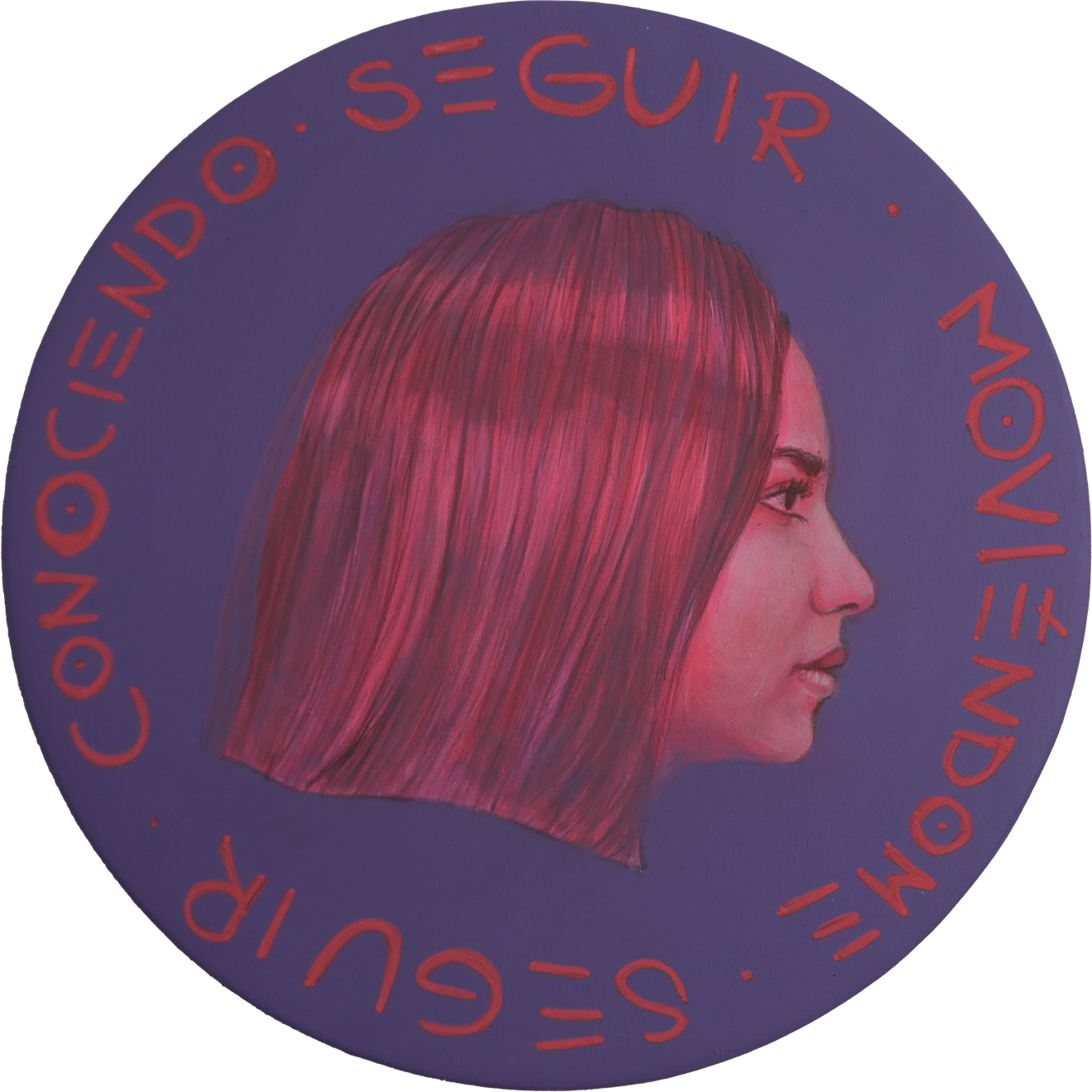
The story of Fátima Story · installations and exhibitions: LSYTSDA Sala Alterarte
Position · 0:00 / 13:05 SubtitlesOff ES EN GL Transcript 0:00 My name is Fátima Pérez. I'm 0:02 23 years old and I'm from Peru. 0:05 I'm from the Peruvian rainforest, from the 0:09 city of Pucallpa, which in Quechua means 0:13 red earth. The city has that name 0:18 because, seen from above, throughout the city 0:23 the earth is red. That earth is 0:28 processed to make works of art, pottery, 0:32 you could say. That's where the name comes 0:37 from. It's also known as May Ushin. That would 0:41 be the name in the Shipibo language. We 0:45 have many Indigenous languages there in Pucallpa. 0:49 I decided to 0:53 move to another 0:57 country because 1:01 I already felt 1:05 that I wanted to grow and that the 1:09 place where I was had become very 1:14 small. I had already lived in several Peruvian 1:17 cities, in the north and also in Cusco. 1:21 I lived in the capital of the Inca 1:26 Empire for six months. There I met 1:30 many people from other countries who 1:34 had already been travelling around the 1:37 world. They asked why I didn't 1:41 also venture out to discover other 1:45 realities, other cultures. I 1:48 realised that those people 1:53 had been through wonderful experiences, and 1:58 I felt that talking to them 2:02 was very fulfilling. They told me they had 2:07 left many things behind in their countries: the comfort 2:11 of having a job, family, 2:16 stability, to live by venturing 2:21 into different places, meeting and connecting 2:25 with more people, discovering other ways 2:29 of thinking. That stayed with me. 2:31 When I returned to my 2:34 city and looked around me, I said that 2:37 I also wanted to grow in that 2:40 way. 2:41 I had been having a lot of anxiety attacks. 2:45 I was afraid of staying there forever, 2:49 doing the same things, falling into a routine. 2:53 I bought a ticket to 2:56 Spain four days before leaving. 3:00 At first it was: “I'll see what it's like, 3:03 have a look around and come back.” 3:07 I bought it four days in advance, 3:11 with nothing prepared. I packed a suitcase. 3:18 I didn't bring everything because I wasn't planning to 3:23 stay. It was: “Let's see. I want to explore.” 3:27 Once here, with my siblings, 3:31 they asked: “Don't you 3:35 want to study?” I had 3:39 planned to study audiovisual production some 3:43 time ago, but I didn't have 3:47 the opportunity because of the pandemic, 3:51 so I studied something else. They asked 3:54 why I didn't study what I wanted here. I said 3:59 yes and, about two days later, came to enrol. 4:04 Things worked out, and I thought: “If 4:07 it's happening, perhaps I'm meant to stay.” 4:10 That's how I stayed here and started studying. 4:17 I was afraid of what 4:20 would happen, of whether 4:24 I'd manage to settle here. 4:29 When you arrive somewhere new, you start accepting things, 4:34 but you wonder: “Will I find something to support myself here, to stay here?” 4:43 I tried not to let those 4:47 negative thoughts take over, to think that 4:51 things would work out. There are things I can't control, things beyond 4:55 my control, and I didn't want to stress about them. 5:00 Things gradually worked out. I 5:05 began to settle more calmly, 5:10 things did work out, and now I'm happy, honestly. 5:16 I felt the cultural difference as 5:19 soon as I got off the plane. 5:24 The culture shock was huge, honestly. 5:28 I arrived at Madrid airport and had to 5:31 take a bus to Santiago de Compostela 5:35 because there were fires here 5:38 and there were no flights. 5:44 I couldn't find anyone to help 5:48 me. People didn't answer: you asked 5:53 and they didn't reply. When I reached the 5:57 bus, my suitcase was very heavy. Everyone 6:02 looked at me and nobody helped. 6:05 That was the biggest culture shock, because 6:08 in a way I felt alone, 6:12 that I had to manage alone. 6:14 Even though 6:18 people speak Spanish, 6:24 the ways of speaking and some words are different. 6:28 Sometimes when I said something, people didn't understand me. 6:32 I had to look for words they would understand. 6:36 It took me time to process it. 6:39 Or when someone said something to me, it 6:43 took time to understand because we use different words. 6:47 Often, when I speak quickly, I use words that people here 6:52 don't use, and they don't understand me. 6:54 The only person missing here for me is my mum. 6:59 As for my friends, 7:02 I've noticed that, after 7:05 I left, we all 7:08 had a plan to leave 7:11 where we were, but nobody took 7:14 the first step. Nobody left. 7:17 After I left, I now have 7:21 a friend who has taken that 7:24 step and is in Australia. Another 7:28 friend went to Switzerland, and another 7:31 to Brazil. Our group 7:36 is very scattered 7:40 around the world. We see the difference: a 7:45 year ago we were together, and now, 7:50 when we want to talk, we have to check 7:52 the time on the other side of the world. 7:56 I'm glad I took that step 8:00 among my close friends so 8:04 that each could find the courage to fly. 8:07 It's even more admirable because they're in 8:11 countries with different languages, and I 8:14 imagine the culture shock is much 8:17 greater. The only person missing here 8:22 is my mum. I'm really glad 8:26 that all my friends are doing well and fulfilling their dreams. 8:32 Honestly, yes, I do feel like an outsider. 8:34 There are many things I don't 8:39 understand, but I'm learning. I find it 8:44 wonderful because I won't just know 8:48 my own culture, but also 8:52 the customs and cultures of another 8:56 place, in this case Galicia. 9:00 As time goes by, I'd like 9:03 to keep moving and keep discovering more. 9:07 That's what I'd like. I wouldn't 9:11 want to shut myself into one place 9:15 or culture, but to keep learning. 9:19 I find it fascinating because, in 9:25 my own country, when I've lived in 9:30 different places, I've discovered different customs 9:33 and cultures. Also, depending on 9:36 the region, people vary a lot. 9:39 That's what I want to keep doing: 9:43 keep discovering. 9:44 What I like most about connecting 9:49 with different cultures is becoming 9:54 more empathetic and seeing other realities. 10:01 When you see someone new arrive, 10:05 you know how that person feels 10:10 and what they need to know or hear 10:14 from you so they don't feel like an outsider. 10:19 Once you've left, you become more 10:23 empathetic towards other people and the situation 10:26 they're going through. I came here 10:30 and found myself in a very 10:33 comfortable situation: I had somewhere to go, 10:36 I have my family and I haven't 10:40 felt alone. I missed my friends, but the 10:43 shock hasn't been as great as for other 10:46 people who come alone and live from day to day, 10:51 without papers, without a 10:56 job, without knowing anyone. 11:01 I've spoken to many people who 11:05 have slept on the street, 11:08 who have experienced homelessness. 11:11 For me, what's important about discovering other cultures 11:17 is that you're no longer detached from other 11:21 people's realities. You put yourself in their shoes 11:25 and have more empathy. 11:31 Often, helping can't mean 11:36 giving them somewhere to stay, but help can 11:41 mean keeping them company. And that's a lot, 11:45 a lot for someone who has just arrived and is alone. 11:49 Yes, I plan to go back, 11:53 but not so much right now. 11:57 Going back to visit, yes, but not 12:02 to stay. I've already left a place 12:07 and I'm not going back. 12:11 There's nothing tying me there 12:15 now. My family is also 12:19 elsewhere. Going back, yes: 12:23 to eat, to experience my 12:28 culture and customs again. But not to stay. 12:34 I think that, for 12:38 my first time… I 12:41 did very well. If I had to give 12:46 myself advice, it would be not to have 12:50 taken so long to make the 12:53 decision. But, as they say, everything 12:56 comes at the right time.