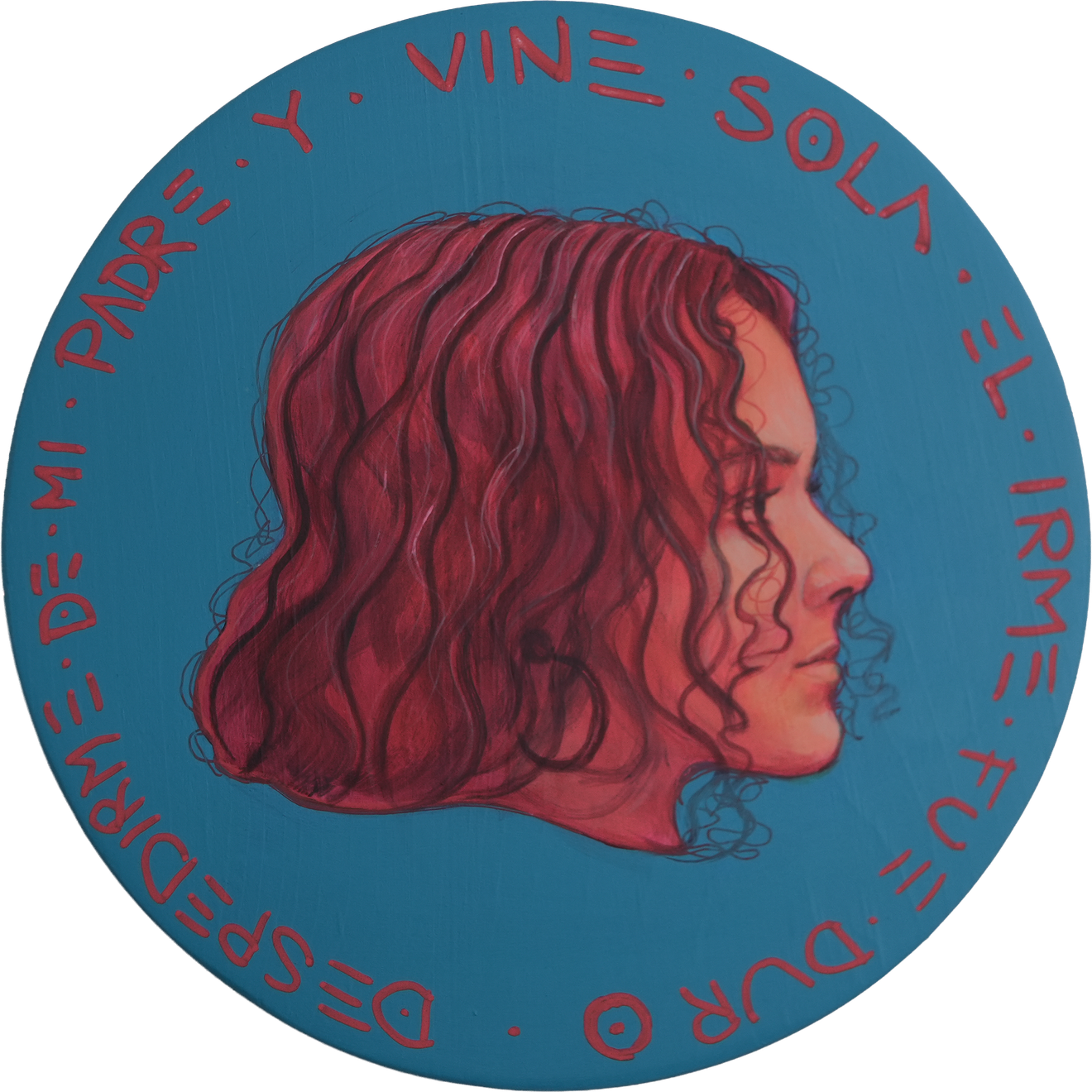
The story of Mia Story · installations and exhibitions: LSYTSDA Sala Alterarte
Position · 0:00 / 9:30 SubtitlesOff ES EN GL Transcript 0:00 My name is Mia. I come from Cuba 0:04 and have lived here in Ourense since February 2023. 0:09 When I left, it wasn't really because I 0:13 wanted to, but because I had to. 0:18 My mother came here when I was about 0:21 six, and I came when I was sixteen. 0:25 I went ten years without seeing my mother. When I 0:28 arrived, I practically got to know her for the first time. 0:31 Before that I only had memories, but I didn't know her personality. 0:36 We had both changed too; we had spent 0:38 a long time apart. I came alone, 0:41 and my father stayed in Cuba. When I arrived, 0:45 it was a process of getting to know her, 0:49 and now I'm grateful we can get along after so much time. 0:53 First, when I found out I was going to leave, 0:58 I stopped going to school. I spent about a year out of school, 1:02 because I knew I was going to leave… 1:05 I spent that year saying goodbyes that seemed endless, 1:09 to everyone I knew. 1:12 Leaving was really hard, and so was saying goodbye to my father. 1:17 When I arrived, the forest struck me first, 1:21 because there is so much woodland here. 1:25 It was the first thing I discovered here. 1:27 I hadn't experienced forests when I lived in Cuba. 1:31 The second thing was the way people spoke. 1:36 In Cuba there is slang, so to speak, 1:40 just as there is here in Galician. 1:44 People express themselves differently. I had to change 1:48 my words so they would understand me. 1:52 It wasn't so much the accent, though that 1:56 mattered too, but the way people understood things. 2:00 I had to rephrase things so people could understand me, 2:03 and that was one of the things that struck me. 2:06 And the cold too, because it is very cold here compared with my country. 2:13 And the beach, which 2:17 is also very far away. 2:20 I've changed a great deal. Let me think… 2:23 Yes, I feel I'm passing through. Since leaving 2:25 my country, I always feel I'm passing through, 2:28 that I'll never again say, "This 2:32 is where I belong," because people are 2:37 all separate. Here, 2:40 regardless of everyone, 2:43 for example, being Galician, I feel each 2:46 person goes home and looks more after 2:49 themselves. People are more independent socially. 2:54 Socially they are much more independent. I don't feel there is 2:57 that kind of connection… Perhaps because I'm a foreigner too, I don't 3:02 feel it as much as with people from my country, whom I could call my 3:05 sisters, simply because they were born 3:09 in the same country. And yes, 3:13 I've changed. I've changed a great deal. 3:18 I used to see things one way, 3:21 and now I see them completely differently. 3:24 My father is still in Cuba. I'd like him 3:27 to be able to come and join me too. 3:30 And all the people I said goodbye to, 3:33 who weren't relatives but whom I considered family, 3:37 simply because we lived in the same country 3:40 and place, and spoke the same language… 3:44 "Language" in quotation marks, of course. 3:46 Those people stayed there, and many 3:49 later left and went to completely different parts of the world. 3:54 We left from one place, but all went to completely different places. There are 3:59 very few left in the country. To 4:03 me, all those people will always be 4:06 part of who I am, even though I said goodbye to them. They made 4:10 me who I am. 4:11 When I arrived here, I started 4:14 feeling very out of place. 4:18 We weren't one network anymore; we 4:21 were no longer individuals holding hands 4:25 and forming a straight line. Instead, everyone went their own way. 4:30 I don't know, perhaps I'm mistaken, but I feel that now 4:34 every person is completely 4:37 different. I feel different, 4:40 but not because I'm Cuban. It's because everyone is different and thinks 4:43 differently. Everyone experienced something different at home, even if 4:48 they were born in the same place. Everyone's parents taught them 4:51 differently, and they see things differently. For that reason, I think so. 4:57 That's something I discovered here: each individual is independent. 5:02 Not so much because of how others see me. When 5:07 someone tries to do something personal, other people will always say: 5:12 "They're doing something different." But that happens here or anywhere in the world. 5:16 When someone doesn't dress or speak 5:20 like everyone else, by their own choice 5:23 or for whatever reason, other people will always find it strange, because everyone 5:26 believes their reality is 5:30 the only reality. So yes, 5:34 I changed things, of course, because 5:37 I learned things that made me act 5:41 differently. But I try to do the 5:45 things I want, or what the people 5:50 closest to me recommend. They advise me, 5:52 and I like following their advice too. 5:56 But I think the things people have 5:58 done to me, so to speak, those 6:01 rumours you mentioned, I don't know whether 6:04 they were specifically because I'm an immigrant. 6:07 Perhaps it's something else, the way I am or how I dress. I don't know whether it's 6:12 specifically because I'm Cuban. No one has 6:14 ever said something like "you little Cuban", 6:17 or something like that. Saying something to 6:20 me specifically because I'm Cuban has never 6:23 happened. There are also many foreign people here, 6:26 many migrants. Perhaps other 6:29 people see them and think: 6:32 "They should go back to their country." 6:36 But on the bus, no one comes 6:39 up to me and says, "Go back to your country." 6:42 Nor do they say it to people of colour; they don't 6:44 say it directly because of their colour. Perhaps they say it at home and online, 6:50 but then they see you face to face 6:52 and don't say it. It would be interesting if, 6:55 if that's what they believe, they shared it face to 6:58 face instead of online. It would be more interesting if 7:01 they did that, to see what the result would be. 7:04 On the one hand, my accent and speech 7:08 are things I've changed a great deal. 7:11 But I think it was more for survival, 7:14 so I could connect with other people. 7:18 That's something I wish I hadn't changed. Although you may still notice it 7:22 a little, I spoke completely differently in my country. When I arrived 7:27 here, people couldn't understand me. It frustrated me 7:30 a lot because I had to repeat things 7:33 again and again to be understood 7:36 properly. That was really what 7:40 struck me most and what I've liked least so far. I would have loved to keep it. 7:45 I would love to… 7:48 I would have loved to carry on living in my country. 7:50 I still dream of returning to my country and not having to leave, 7:55 of being able to stay there. I think 7:59 many people feel that. It's like a balance: 8:03 some people are traumatised and think it was awful, that the experience 8:07 they had was very bad, and they don't want to return. Other people 8:13 keep dreaming that the experience could have been different, 8:17 that my country wouldn't have had to go through what happened, and I wouldn't have 8:20 had to tear out that part of my heart and leave it there. 8:26 I'd love to return. If I had the chance, 8:30 I would, but I don't think it will happen. 8:35 If it happens, good. But I think it 8:39 might not, because no one is going to 8:43 save them. That's what I think: no one is going to save them. 8:48 Some of us have to live 8:51 through whatever life brings us. 8:55 I think it's all about learning 8:59 something, or that's how I feel. Perhaps 9:03 it's some kind of karma, or 9:06 perhaps because we're meant to become 9:09 stronger. Or perhaps everyone has to live through something bad. 9:13 Or perhaps not. Maybe some people live in 9:17 a world of roses, though I don't know. 9:20 I think that's life.